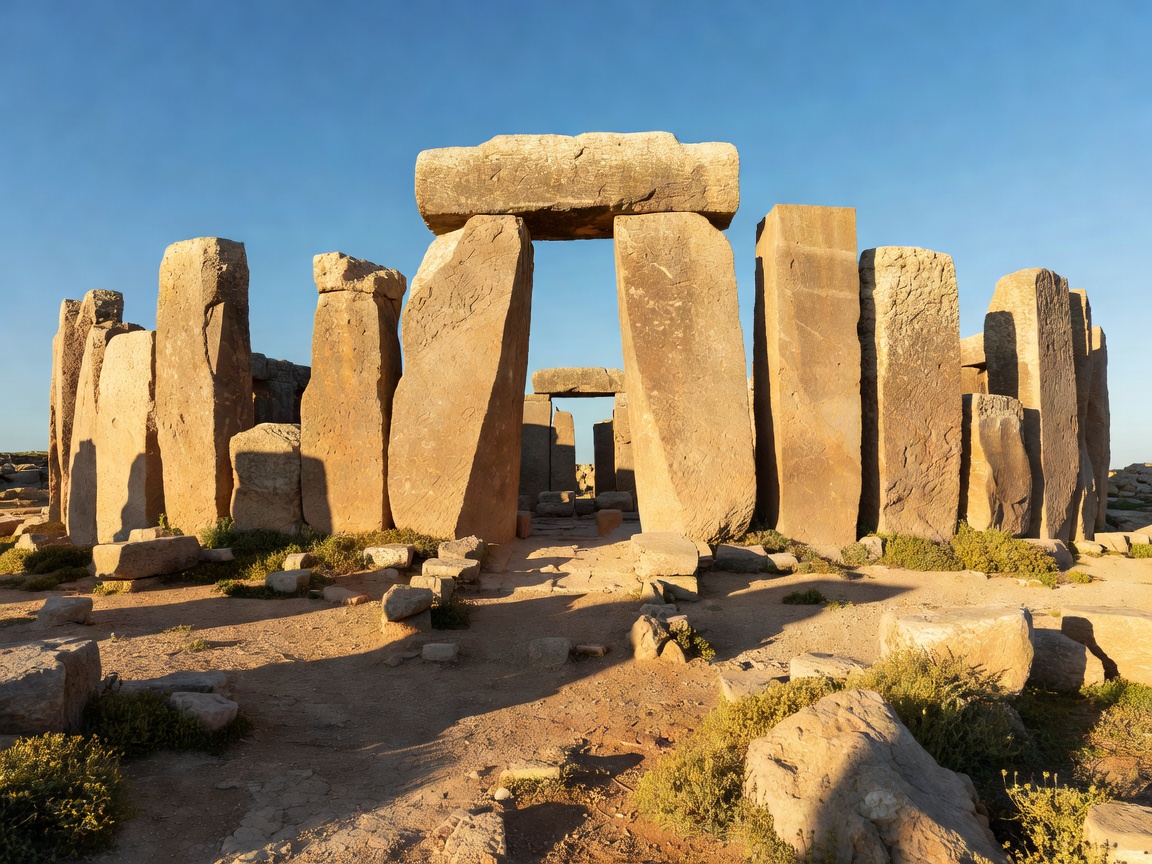
When Were the Earliest Maltese Sanctuaries Erected?
The earliest known freestanding stone temple complex in the archipelago was constructed at Ġgantija on the island of Gozo around 3600 BCE during the eponymous Ġgantija Phase.
Archaeological carbon dating confirms that this monumental architecture predates the construction of Egypt's Great Pyramid at Giza and England's sarsen circle at Stonehenge by several centuries. The builders arrived in the archipelago around 5000 BCE from nearby Sicily during the Għar Dalam Phase, bringing domesticated animals, cereal cultivation techniques, and pottery. Over subsequent generations, these early agrarian communities developed an isolated, highly stratified island culture capable of mobilising significant labour forces to extract, transport, and assemble limestone orthostats weighing over twenty tonnes each.
How Did Temple Architecture Evolve Across Distinct Phases?
Temple architecture evolved from simple trefoil lobed enclosures into sophisticated multi-apse ceremonial sanctuaries featuring monumental trilithon doorways and dressed stone paving.
During the Saflieni (3300–3000 BCE) and Tarxien (3000–2500 BCE) phases, builders transitioned from the coarse Upper Coralline limestone seen at Ġgantija to softer, easily sculptured Globigerina limestone. At Ħaġar Qim and Mnajdra in southern Malta, the floor plans expanded to include four- and five-apse structures arranged symmetrically along an axial central corridor. Masonry features included pitted decorative stone panels, carved animal reliefs, and interlocking lintels. At Mnajdra's lower temple, the entrance was deliberately aligned with solstitial and equinoctial sunrises, allowing solar rays to illuminate internal altars on specific astronomical dates.
What Function Did the Ħal Saflieni Hypogeum Serve?
The Ħal Saflieni Hypogeum served as a multi-level subterranean burial complex and ritual sanctuary excavated directly into soft limestone between 4000 BCE and 2500 BCE.
Discovered accidentally during residential construction in Paola in 1902, the Hypogeum extends three storeys downward into the rock, spanning more than 500 square metres. Its chambers replicate the architectural layouts of above-ground temples, complete with faux trilithon portals, corbelled ceilings, and red ochre geometric spiral paintings. Anthropological recovery directed by Sir Themistocles Zammit unearthed the disarticulated skeletal remains of an estimated seven thousand individuals alongside decorative grave goods, including the famous ceramic figurine known as the Sleeping Lady of Malta.
Why Did the Temple Builder Culture Suddenly Collapse?
The temple builder culture collapsed around 2500 BCE due to a combination of environmental degradation, prolonged climatic drought, and socio-ecological exhaustion.
Pollen core analyses and soil stratigraphy indicate severe deforestation across Malta and Gozo during the third millennium BCE, which led to irreversible topsoil erosion and diminished agricultural yields on the semi-arid islands. As food production declined, the immense resources demanded to construct and maintain monumental stone sanctuaries could no longer be sustained. Subsequent layers at Tarxien show an abrupt cultural break, replaced by Bronze Age immigrants from Sicily who brought cremation rituals, bronze metalwork, and fortified defensive settlements at sites like Borg in-Nadur.
| Archaeological Phase | Approximate Date | Key Architectural & Material Hallmarks | Representative Sites |
|---|---|---|---|
| Għar Dalam Phase | 5000–4500 BCE | Early agricultural settlement, impressed pottery, cave dwellings | Għar Dalam Cave, Skorba |
| Ġgantija Phase | 3600–3200 BCE | First massive corbelled stone temples, cloverleaf trefoil floorplans | Ġgantija, Ta' Ħaġrat |
| Saflieni Phase | 3300–3000 BCE | Subterranean architectural excavation, red ochre wall frescoes | Ħal Saflieni Hypogeum |
| Tarxien Phase | 3000–2500 BCE | Intricate spiral relief stone carving, animal friezes, solar alignments | Tarxien, Ħaġar Qim, Mnajdra |
| Tarxien Cemetery Phase | 2500–1500 BCE | Bronze Age cultural replacement, cremation burials, bronze daggers | Tarxien Cemetery, Borg in-Nadur |